
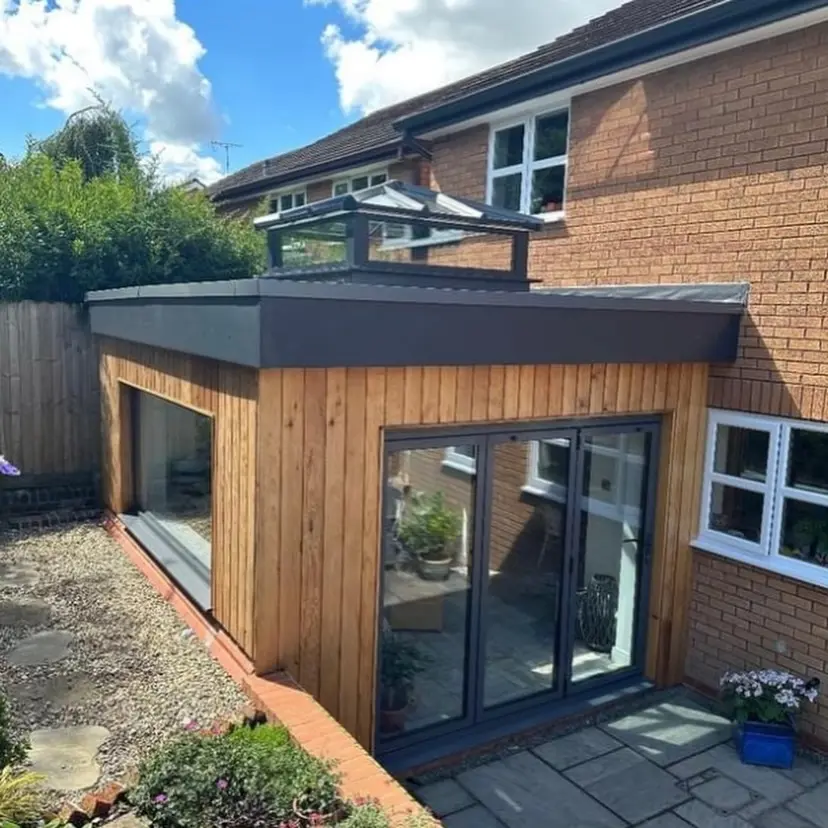
Is the answer always eight weeks?
Eight weeks is the statutory period for development that is not classed as major development. A normal householder application for an extension falls into that category. Article 34 of the Development Management Procedure Order sets the period, and current government guidance says most planning applications are decided within eight weeks.
That does not mean a homeowner should expect a decision exactly eight weeks after asking a designer to start. The design and application must be prepared, submitted and made valid first. The council can also ask the applicant to agree a longer period in writing where more time is genuinely needed. Read the government decision-time guidance.
When does the planning clock start?
The application needs to be valid. That means the required form, ownership certificate, plans, supporting information and fee must be provided. Councils can also publish a local validation list for information needed in their area.
If something required is missing or unclear, the authority may treat the application as invalid and ask for more information. That can add time before the application reaches its normal assessment stage. Hinckley and Bosworth, for example, warns that missing information from its validation list can delay determination. Other councils have their own current lists, so check the authority for the property rather than relying on a generic checklist.
Once an application is valid, the applicant or agent should receive an acknowledgement with the target decision date. See the nearby council's progress guidance.
What happens during the eight weeks?
The exact sequence varies, but a straightforward householder application normally moves through these stages:
- Validation and registration: the authority checks that the application contains the required information and fee.
- Publicity and consultation: neighbours and relevant consultees may be invited to comment. Comments are considered where they raise material planning matters.
- Officer assessment: the case officer reviews the drawings, planning history, development plan and other material considerations. A site visit may be made.
- Recommendation and decision: the application is decided under delegated powers or, less commonly for a householder project, by a planning committee.
- Decision notice: the notice confirms approval or refusal and, if approved, lists any planning conditions.
The authority decides the application against its development plan and relevant material considerations. The number of objections alone does not determine the outcome. See what councils consider after submission.

Why can an extension application take longer?
Common causes include an incomplete submission, a request for amended drawings, heritage or tree issues, consultation responses that need resolving, a committee date, or an unusually complex planning history. A revised design can be worth considering if it resolves a genuine planning concern, but there is no automatic right to negotiate amendments within the original period.
If more time is needed, the council may ask for an extension of time. Government guidance says this agreement must be in writing and should state the revised decision timescale. Read the proposed date before agreeing so that the programme is clear.
A good submission cannot guarantee approval or an eight-week result, but it can remove avoidable delay. Check the current validation list, use consistent drawing revisions, pay the correct fee and answer validation queries promptly.
Can building work start as soon as permission is granted?
Not necessarily. Read the whole decision notice before booking work. Some conditions may require details to be approved before a particular part of the development starts. Planning permission also does not replace Building Regulations approval, a party wall procedure, a build-over agreement, landowner consent or any other approval that applies to the project.
The technical drawings, structural design and builder pricing may also need completing. Starting these tasks at suitable points during the planning period can reduce the gap after approval, but avoid committing to irreversible work while the planning outcome or design remains uncertain. Our guide to planning permission and Building Regulations explains the difference.
What if there is no decision by the deadline?
If a valid application has not been decided within the statutory period, or within a longer period agreed in writing, the applicant can appeal against non-determination. An appeal is a formal step and is not always the quickest practical answer, so first establish the application's current position, any outstanding issue and the council's realistic decision date.
For a live application, keep the validation letter, target date, drawing revisions and correspondence together. If the council requests more time, ask what remains outstanding and what date it expects to decide the application. Government guidance explains non-determination and extensions of time.
When planning an extension, allow for design and validation before the eight-week period, then allow for any conditions and technical work afterwards. For help preparing a coordinated householder submission, send the property address, photographs, any existing drawings and a short description of the extension you are considering.
Sources & further reading
Official guidance checked on 7 October 2026. This guide covers England and provides general information. Your property and proposal need their own assessment.
- The Town and Country Planning (Development Management Procedure) (England) Order 2015: article 34
- GOV.UK: planning permission, after you apply
- GOV.UK: determining a planning application
- Hinckley and Bosworth Borough Council: required documents for a valid planning application
- Hinckley and Bosworth Borough Council: checking the progress of planning applications